Product / Experience Design • UX Systems • Automation
Surprise Podcast Guest Experience
An automated system that lets podcast listeners opt in to become surprise guests, selected fairly, onboarded automatically, with zero manual work for the host.
Role
System Architecture, UX Design, Automation Engineering
Timeline
3.5 months (Aug–Nov 2025)
Tools
Kit, Zapier, Google Sheets
Type
Systems UX, Automation
Overview
The Surprise Podcast Guest Experience enables podcast listeners to opt into a shared pool where they may be randomly selected to participate live in an episode alongside a featured expert, covering topics like healing, energy work, and mindfulness.
The challenge wasn't just automating selection. It was designing a trust-based, fair, and emotionally safe experience that could run reliably without manual oversight.
This system was built for Autumn Carter's podcast, handling end-to-end listener intake, randomized selection, backup management, and automated onboarding.
The Problem
There was no way for listeners to participate as live podcast guests.
Manual coordination wouldn't scale: tracking interest by topic, managing backups if someone dropped out, and onboarding participants would require constant manual manual follow-up. Live recordings leave no room for failure, where failures aren't acceptable.
The result: Listeners couldn't participate, and the format was too risky to try.
Context & Constraints
Stakeholders: Podcast listeners (primary user), Autumn (system operator), featured podcast guests
Key Constraints
- System had to be built on Kit (already central to subscriber workflow)
- Zapier automation limited by trigger reliability and plan tier
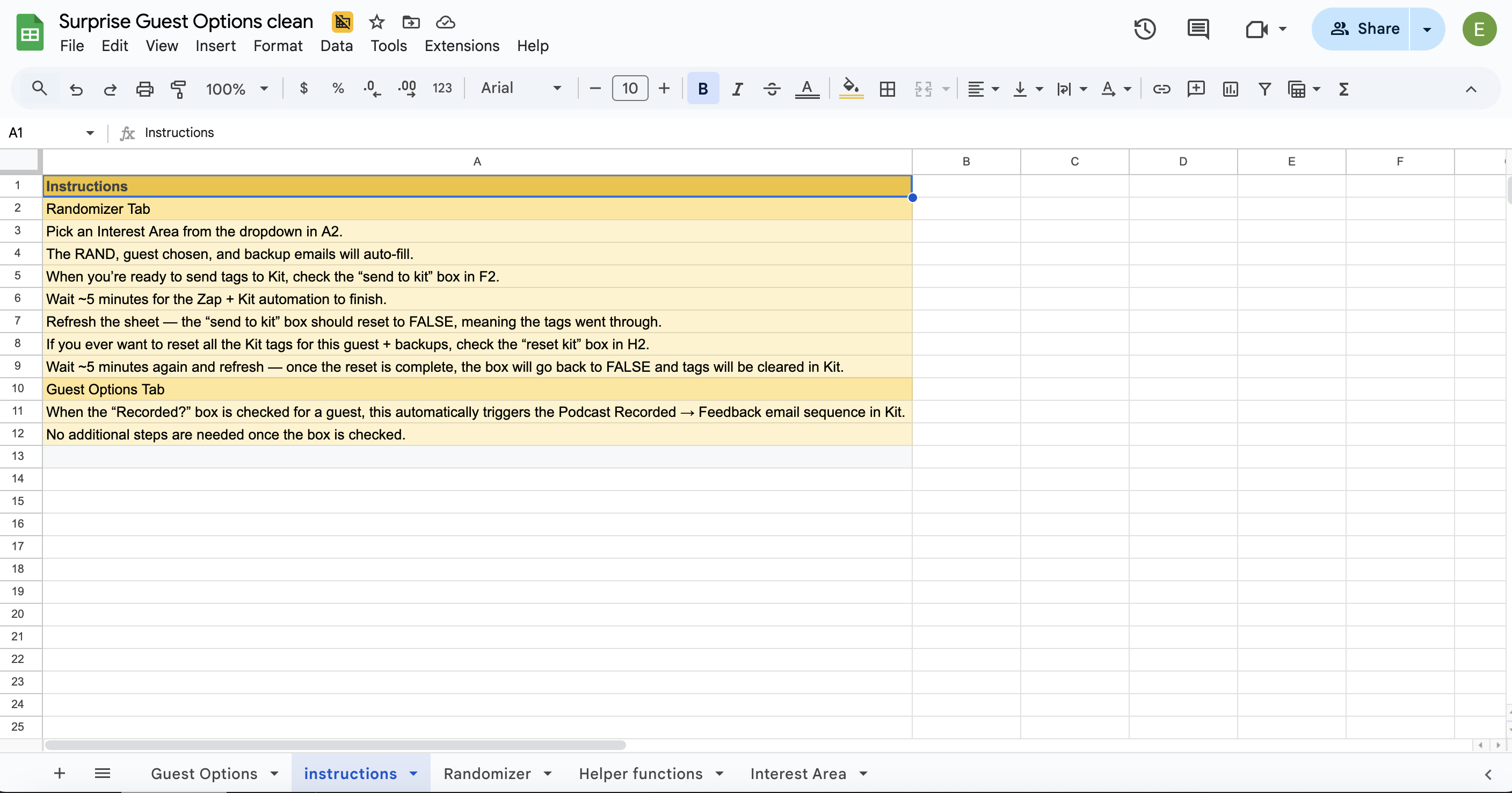
- Needed to be operable by Autumn without technical intervention
- Reliability mattered more than complexity: failures during live recordings were unacceptable
Goals & Success Criteria
Primary Goals:
→ Automate listener intake, selection, and onboarding
→ Remove manual picking and emailing from host's workflow
→ Enable a scalable, repeatable podcast format
Success Criteria:
→ System consistently outputs one chosen listener + two backups, matched by topic
→ Onboarding emails send automatically without manual work
→ Experience feels fair, clear, and trustworthy for listeners
Process & Approach
01 — Discovery & Mapping
I mapped the full conceptual flow from listener interest to live participation and identified where manual approaches would break: no reliable way to track interest by topic, no backup plan if a chosen listener dropped out, and high risk of missed communication.
This led to designing primary and backup selections as a core requirement, not an afterthought.
02 — Design Decisions
Key decisions were driven by experience design, not tools:
Randomized selection ensured fairness and avoided bias. Backup guests increased reliability for live recordings. Separation of intake, selection, and onboarding made the system easier to operate and debug. Partial automation allowed Autumn to choose episode topics intentionally while letting the system handle everything else.
03 — Iteration & Testing
Early versions revealed reliability issues: Zapier triggers failed when events occurred too close together, data updates were not consistently recognized as "new events," and randomization logic worked mathematically but failed operationally.
The system became reliable after restructuring how Google Sheets marked entries as "new," simplifying trigger logic, and testing failure scenarios to ensure nothing broke during live recordings.
End-to-End System
Flow:
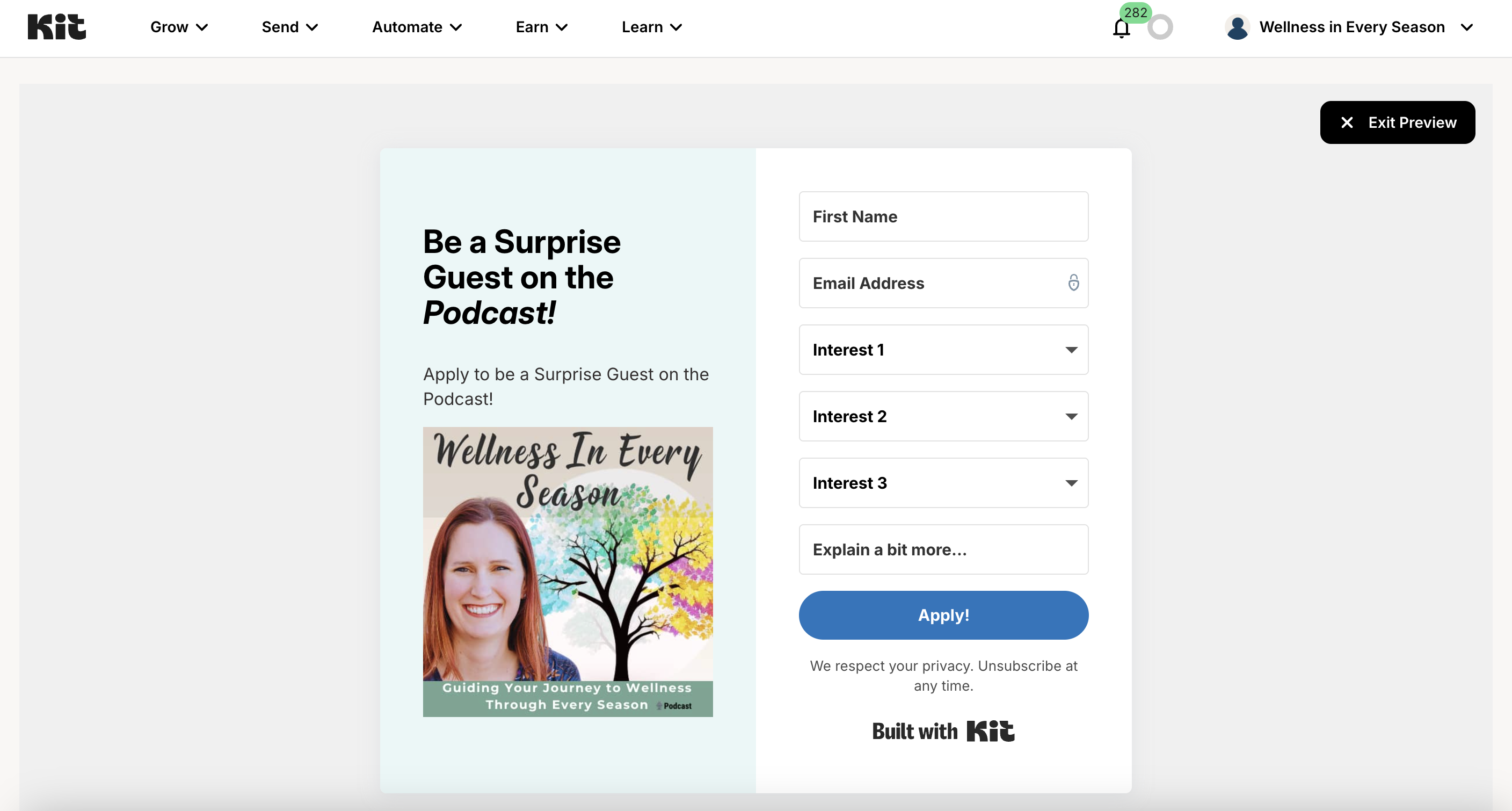
- Listener signs up via Kit form
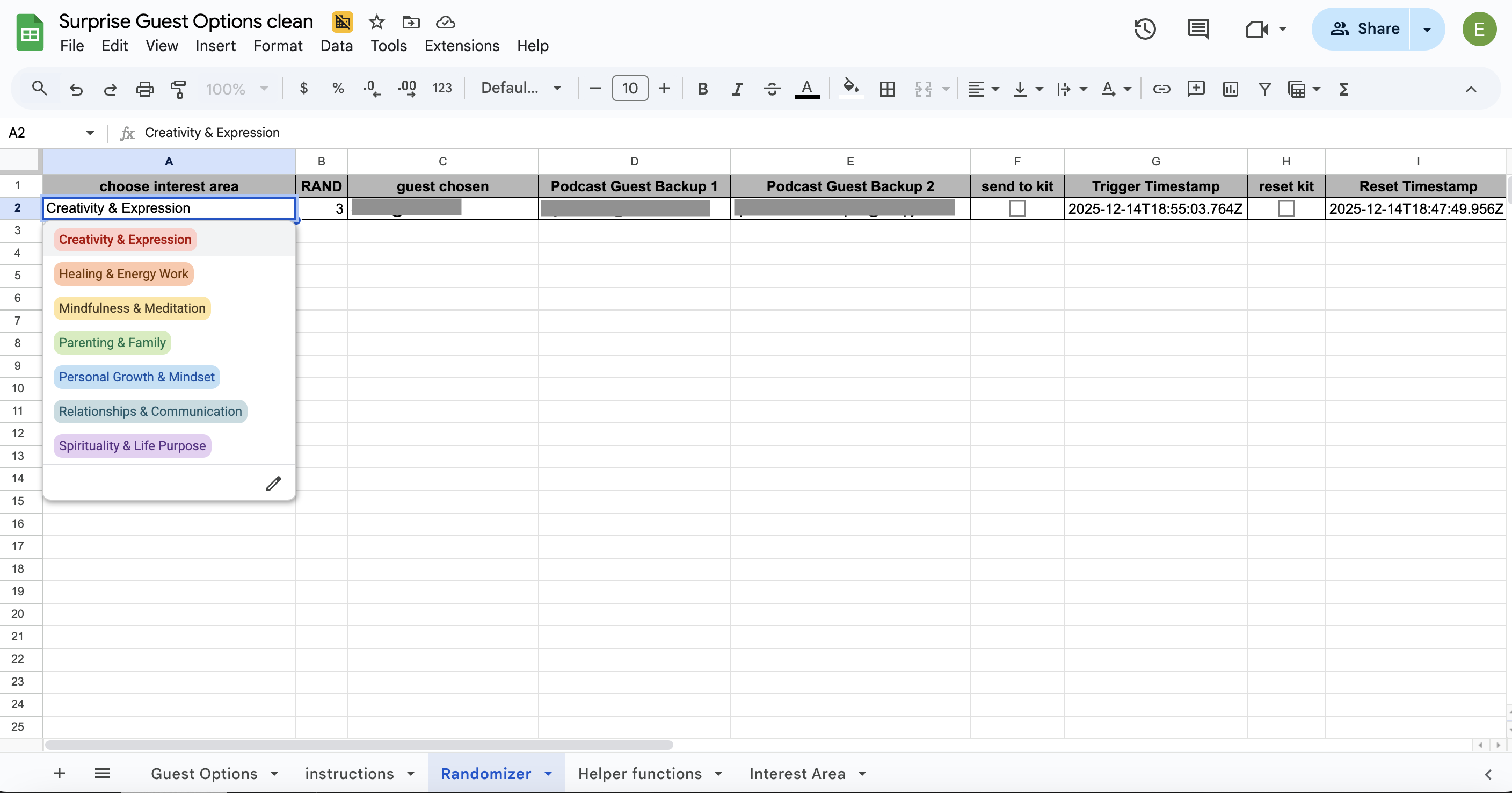
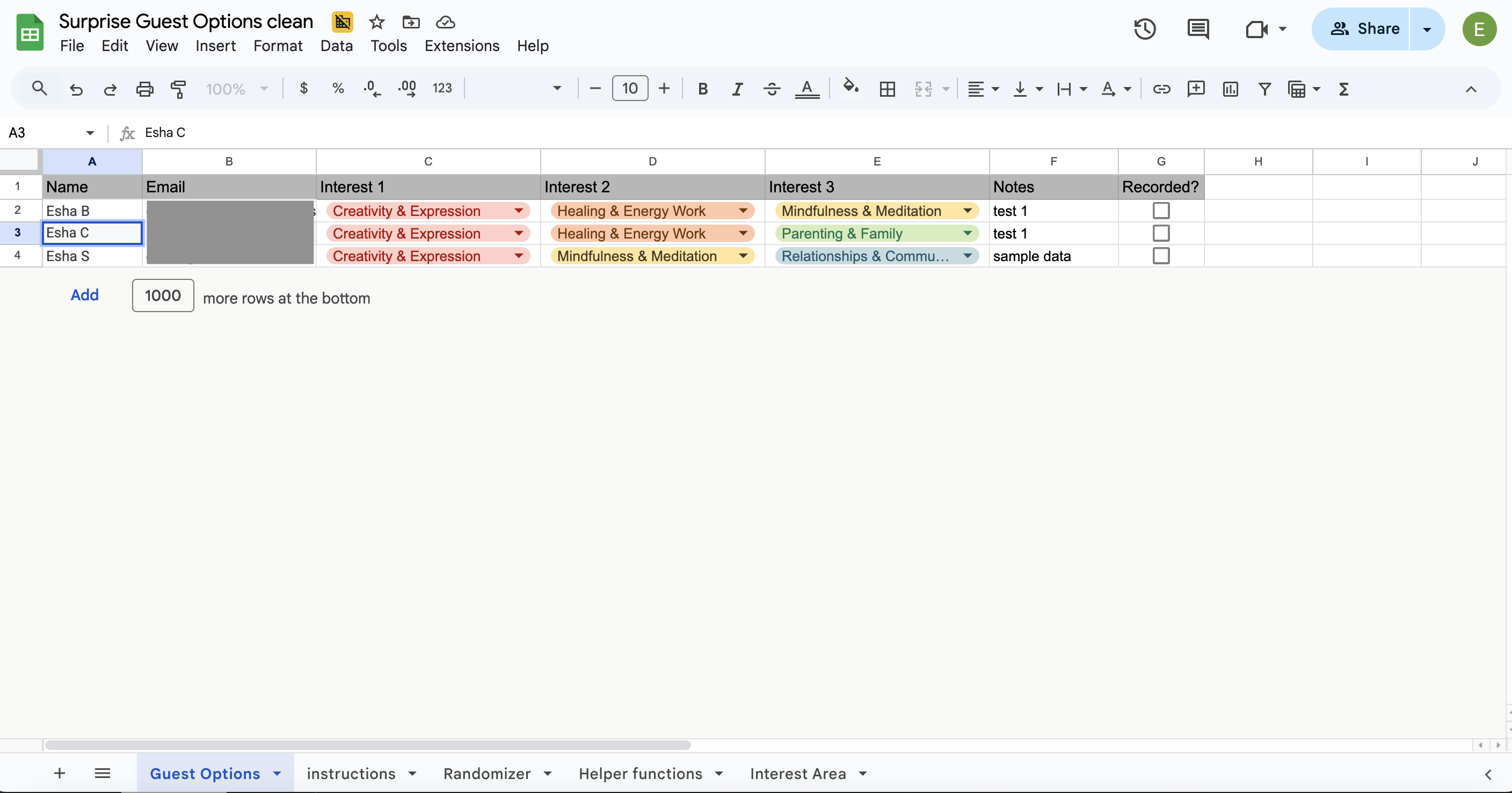
- Data synced to Google Sheets tracker
- Autumn selects topic for upcoming episode
- System filters pool by interest area
- One primary + two backups randomly selected
- Tags applied in Kit
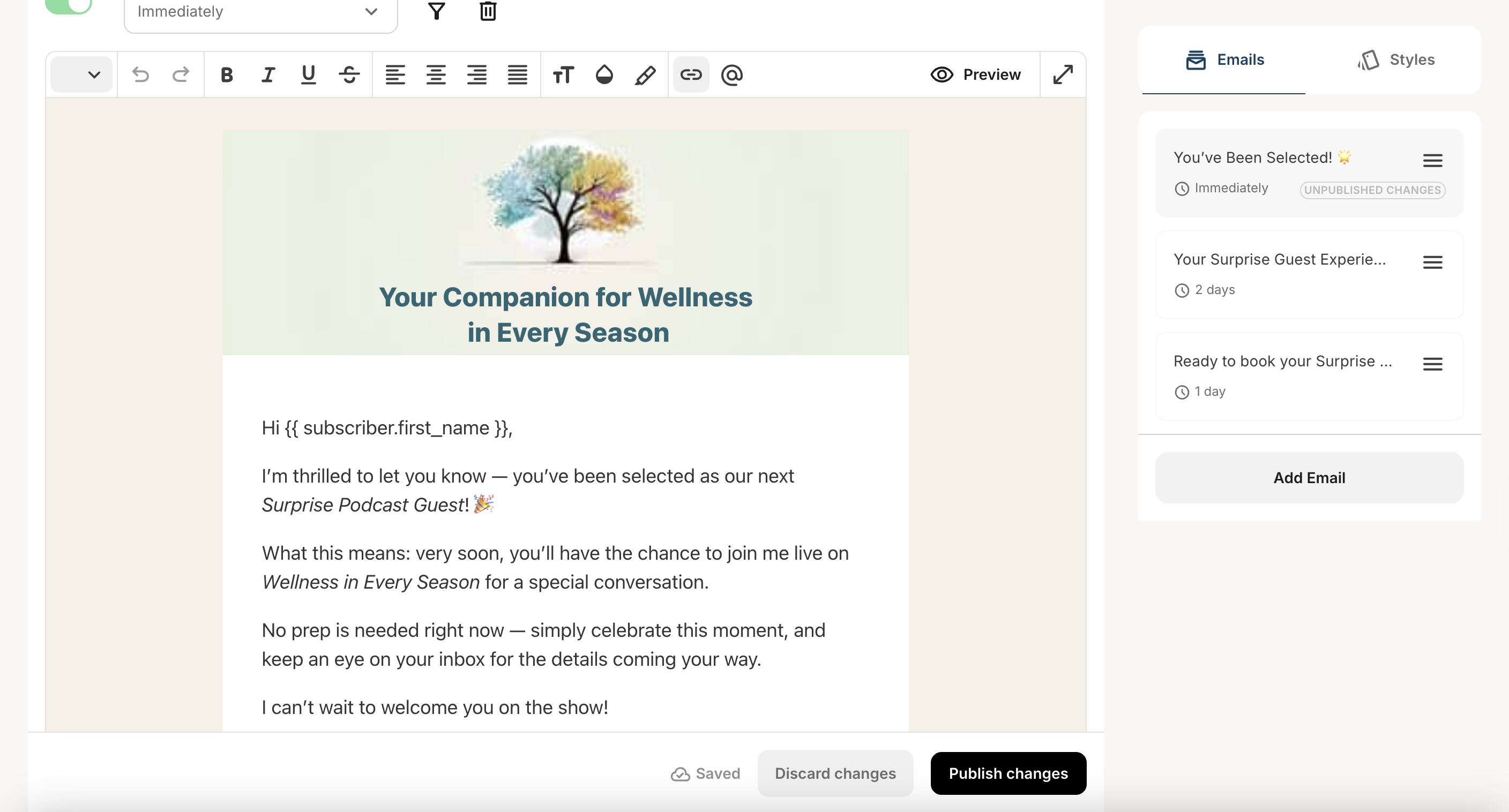
- Onboarding emails sent automatically
- System resets for next cycle
Key Components
- Listener Intake Form (Kit) : lets listeners opt in and select up to three interest areas
- Google Sheets Tracker : central source of truth for filtering, randomization, and selection
- Randomization Logic : ensures fair selection using formula-based randomization
- Email Sequences (Kit) : automated onboarding emails for confirmation, selection, backups, and prep
- Tag-Based State Management : syncs listener status across systems
Outcome & Impact
Status: Built, tested, and validated through end-to-end walkthroughs. Ready for production use in upcoming episodes.
Expected Impact: Will eliminate manual tracking, selection, and onboarding, freeing the host to focus on content while enabling a more interactive podcast format.
Reflection
This project reinforced that UX is not limited to screens. I was designing trust (listeners needed to feel the process was fair), safety (participation involved vulnerability), and reliability (live recordings leave no room for failure). The hardest part wasn't building the system, it was understanding the human stakes well enough to design it correctly.
What I learned
- How to translate human needs into system logic
- How to design for non-technical operators who need to run complex workflows without technical intervention
- How to anticipate edge cases in real-world workflows before they become failures
What this shows
- I can design and build complex, human-centered systems that work reliably in the real world
- I can work directly with a client to understand their needs and translate them into a functioning system
If I rebuilt this today
- Build directly in a purpose-made tool rather than stitching together Kit, Zapier, and Sheets: reduces brittleness at the integration points
- Add a simple operator dashboard so Autumn can see system status at a glance without opening multiple tools
- Design a fallback flow for when no backup guests are available, which wasn't fully addressed