UX Case Study • Systems Design • Interactive Narrative • Capstone Project
Day in My Life: Sober Edition
A narrative-driven game about addiction, recovery, and the ongoing act of choosing yourself.
Role
Concept & Core Idea, Systems & Mechanics Design, Programming, Narrative, UX Flow Design
Timeline
1 year (Spring–Fall 2025)
Tools
Godot, GDScript, Photoshop
Type
Game Dev, Systems Design

Overview
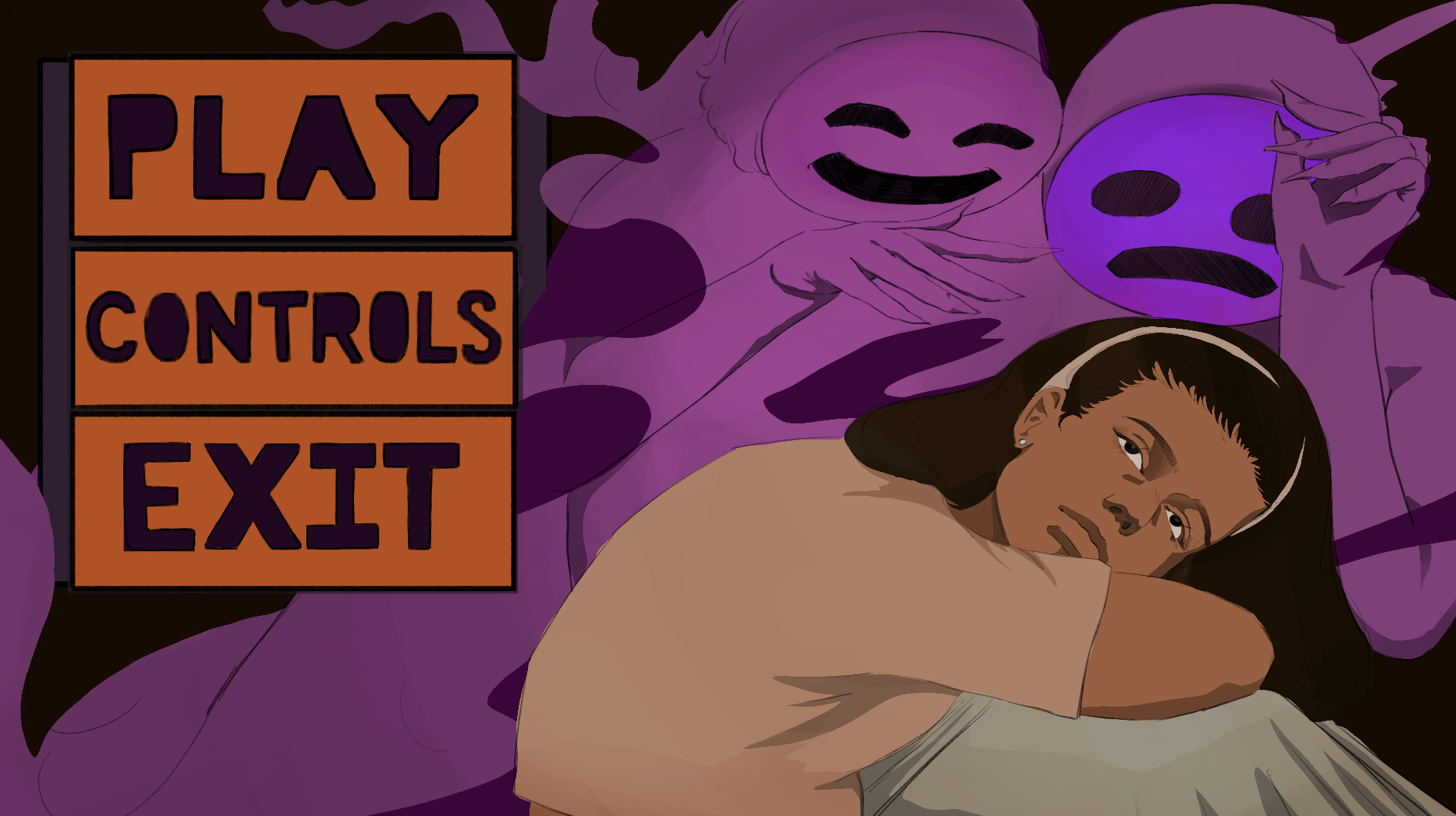
Day in My Life: Sober Edition is a personal, narrative-driven game that explores addiction and recovery through metaphor, humor, and emotional honesty. Rather than framing recovery as a single victory or failure, the game treats it as a repetitive, nonlinear process, one that requires constant self-awareness and recommitment.
This project was created as my Media Arts and Sciences Capstone and showcased publicly at the ASU Capstone Showcase on December 5, 2025. While it takes the form of a game, it was designed first as a system for understanding an emotional experience, using mechanics to reinforce meaning rather than spectacle.
At its core, the game asks players to sit with discomfort, repetition, and imperfection, and to keep going anyway.
The Problem
Most media representations of addiction and recovery fall into extremes: either dramatic collapse followed by redemption, or a clean, linear success story. Both oversimplify the reality of recovery.
In reality, recovery is ongoing, frustrating, and often invisible. Relapse is common, emotionally loaded, and rarely framed with empathy. There are very few interactive experiences that reflect this reality, especially ones that center internal struggle rather than external punishment.
This project responds to that gap by reframing recovery as persistence, not perfection, and by treating relapse as part of the system rather than a failure state.
Context & Constraints
Context: Year-long capstone project with a public showcase, two-person team (myself + one artist), designed to be understandable and impactful in a short demo setting.
Key Constraints
- Time: limited to two semesters
- Team size: systems, narrative, and programming handled solely by me; visual art by one collaborator
- Scope: reduced from three planned levels to one fully polished level and boss
- Technical learning curve: first project built in Godot
- Emotional sensitivity: required careful balance between humor and respect
These constraints shaped the project's direction, pushing it toward depth, clarity, and intentional design over scale.
Goals & Success Criteria
Emotional Goals:
→ Communicate that recovery is difficult, repetitive, and nonlinear
→ Normalize relapse without moralizing it
→ Balance humor with seriousness in a way that feels human, not dismissive
Design Goals:
→ Use mechanics to reinforce emotional meaning
→ Externalize internal struggles through systems and enemy behavior
→ Keep the experience readable and engaging in a public showcase context
Process & Approach
01 — Discovery & Framing
The project began with research into addiction, relapse, and emotional regulation, alongside reflection on lived experience. Instead of starting with mechanics, I started by mapping emotional states: shame, temptation, overwhelm, self-awareness, and exploring how they could be translated into systems.
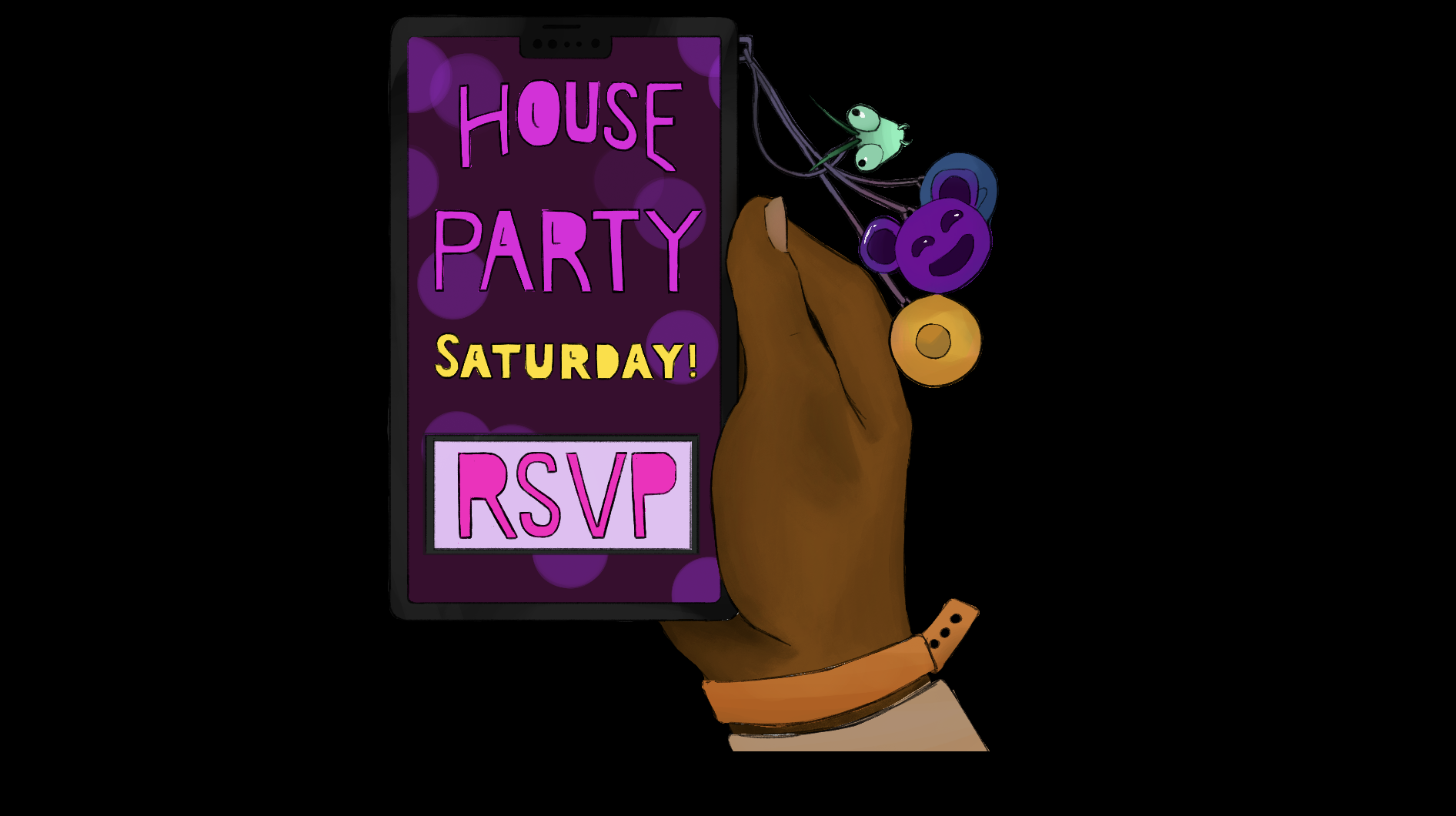
The house party setting was chosen deliberately: a familiar environment where alcohol is normalized and opting out feels visible and isolating. As the game progresses, this environment becomes increasingly abstract, mirroring internal emotional distortion.
02 — Design Decisions
Symbolic over literal: Enemies are exaggerated manifestations of internal and social pressure. Jocks throw red solo cups to represent normalized drinking culture, druggies throw pill bottles as temptation, and mean girls attack with words, embodying internalized stigma.
Tone: playful, not trivial: Humor functions as a coping language, not a joke. The game allows players to feel discomfort and levity at the same time, reflecting how many people navigate difficult realities.
Core mechanic choice: The final boss can only be defeated using the Mirror Shard, a mechanic that forces confrontation with the self. Traditional combat alone is ineffective. Awareness and reflection are required to move forward.
03 — Iteration & Testing
Early enemy AI relied on simple follow/patrol logic, which became unmanageable as complexity increased. I refactored enemy behavior into a state machine with multiple states, improving modularity and tuning.
Playtesting revealed that players needed time to adjust, which aligned with the game's core message. That friction remained by design.
The System
The game is a 2D top-down experience centered on managing sobriety as a finite, renewable resource.
Key Mechanics
- Sobriety Meter: drains under stress and pressure
- Grounding Tasks: water, fresh air, and private space restore stability
- Enemies: represent internal and social triggers
- Mirror Shard: required to defeat the final boss through self-recognition
- Relapse State: resets progress without judgment
Core Loop
Face temptation → manage sobriety → complete tasks → confront the self → repeat
Progress strengthens the player's capacity to continue, rather than eliminating difficulty entirely.
Outcome & Impact
Fully playable demo with a complete level and boss encounter, presented at the ASU Capstone Showcase with strong emotional engagement from classmates, faculty, and attendees.
Players understood the message, connected emotionally, and engaged with the humor while respecting the seriousness of the topic. Many asked questions about addiction and recovery after playing.
Reflection
This project reinforced that systems are interfaces. UX extends beyond screens. Emotional friction can be intentional and meaningful, and iteration and playtesting are where clarity emerges. More than anything, this project represents how I work: iteratively, empathetically, and with respect for complexity.
What I learned
- Mechanics can carry emotional meaning: design decisions at the system level shape how players feel, not just what they do
- Friction is a design choice, not a failure: the pool collectible moment only worked because we understood why it was hard and iterated deliberately
- Playtesting surfaces things no amount of planning can predict
What this shows
- I can design systems that help people understand experiences that don't fit neatly into linear frameworks
- I can balance emotional sensitivity with functional design under real constraints
- I can own a project end-to-end, from concept through a public showcase
If I rebuilt this today
- Improve visual consistency across all environments and UI states
- Expand accessibility considerations, especially for players with sensory sensitivities
- Complete the originally planned three-level structure with the dorm and office environments